
David Spade reflects on the “falling star” joke that sparked a decades-long rift with Eddie Murphy.
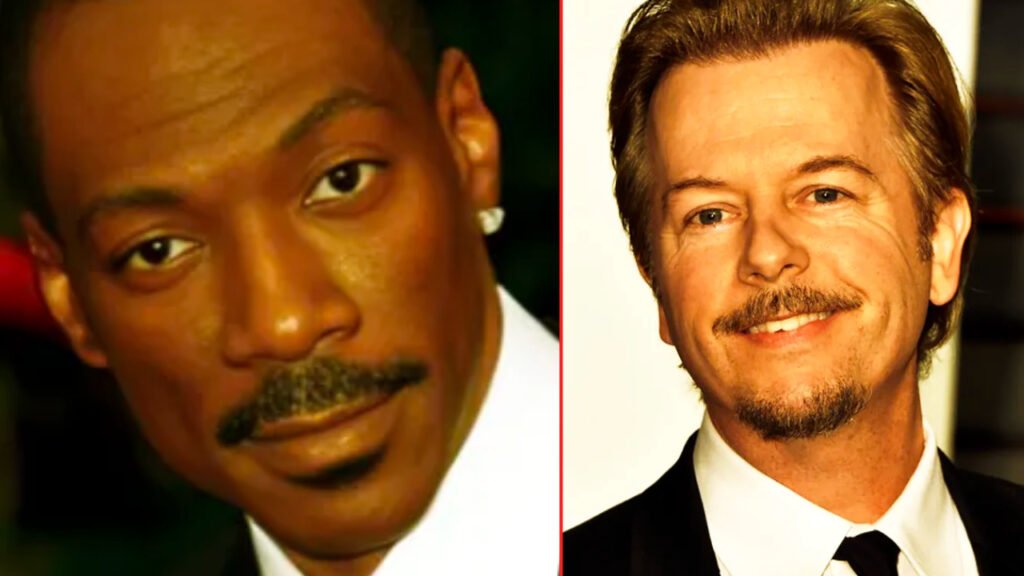
Saturday Night Live
Can a single sentence destroy a decades-long idolization?
David Spade found out the hard way in 1995. One night, he was a rising star on Saturday Night Live, trying to land a laugh; the next morning, he was the man who had officially insulted the greatest alumnus in the show’s history.
The fallout didn’t last for a news cycle—it lasted for three decades.
The Joke That Burned the Bridge
During his “Hollywood Minute” segment, a photo of Eddie Murphy flashed on the screen.
Spade, leaning into his trademark snark, delivered the line: “Look, children, it’s a falling star, make a wish.”
At the time, Murphy was reeling from the box office failure of Vampire in Brooklyn. To Spade, it was a timely jab at a Hollywood slump. To Murphy, it was a “cheap shot” from a family member.
Murphy recently admitted that the joke felt “racist” and, more importantly, like a betrayal of the “in-house” code. He wasn’t just another celebrity; he was the man who arguably saved SNL in the 80s.
The Silent Phone Call
When Murphy finally called Spade to “have it out,” the interaction wasn’t a debate.
Spade, now 61, recalls sitting on the other end of the line while his hero dismantled him.
“I didn’t fight back really, because I did feel a little guilty about it,” Spade shared on his Fly on the Wall podcast.
It is rare to see a comedian admit to being genuinely rattled, but Spade’s regret stems from a place of “hero worship.”
It’s a strange professional limbo: how do you navigate making fun of the very people who inspired you to pick up a microphone?
Why Time Isn’t the Only Healer
While Dana Carvey suggests that “time heals all wounds,” the resolution of the Spade-Murphy feud required something more:
accountability without defensiveness.
- The Guilt Factor: Spade spent 25 years trying to “win him back,” not by launching counter-attacks, but by admitting the joke was a mistake.
- The “In-House” Dynamic: The feud highlights a unique tension within SNL. The show thrives on biting satire, but when that bite is directed at the “family,” it feels less like comedy and more like mutiny.
- The Racial Undercurrent: Murphy’s perspective that the joke was “racist” adds a layer that Spade—new to the show and coming from a different background—initially failed to grasp. In the mid-90s, the “falling star” narrative was often weaponized against Black actors in ways their white counterparts avoided.
The Power of Not Fighting Back
Common PR wisdom suggests that if a celebrity attacks you, you should double down or “own the bit” to stay relevant. This is usually a mistake.
Spade’s refusal to “fight back” during Murphy’s legendary phone tirade is exactly why they were able to shake hands at the SNL 50th Anniversary special this February.
By absorbing the blow and acknowledging Murphy’s “sense,” Spade left the door cracked open for a future truce.
If you value the relationship more than the “win,” you have to be willing to lose the argument.
The Final Act: “Everything’s Fine”
At the SNL50 celebration, the “weird vibes” finally evaporated. Murphy, now 64, has officially let it go, stating that “it’s all love” now.
For Spade, the 30-year weight has lifted. He didn’t just get his hero back; he learned that even in the cutthroat world of 90s comedy, some bridges are worth rebuilding brick by brick.
Key Takeaways:
- Satire has limits: Even “in-house” family members have breaking points.
- Silence is strategic: Sometimes, the best response to a hero’s anger is to listen.
- Closure takes decades: Real reconciliation isn’t a PR statement; it’s a slow process of mutual maturity.
Summary:
After 30 years of tension triggered by a 1995 SNL sketch, David Spade and Eddie Murphy have officially mended fences, proving that accountability and time can eventually bridge the gap between a fan and his hero.

Breaking celebrity news and hot gossip. We deliver the juiciest stories and trending star updates fast.