
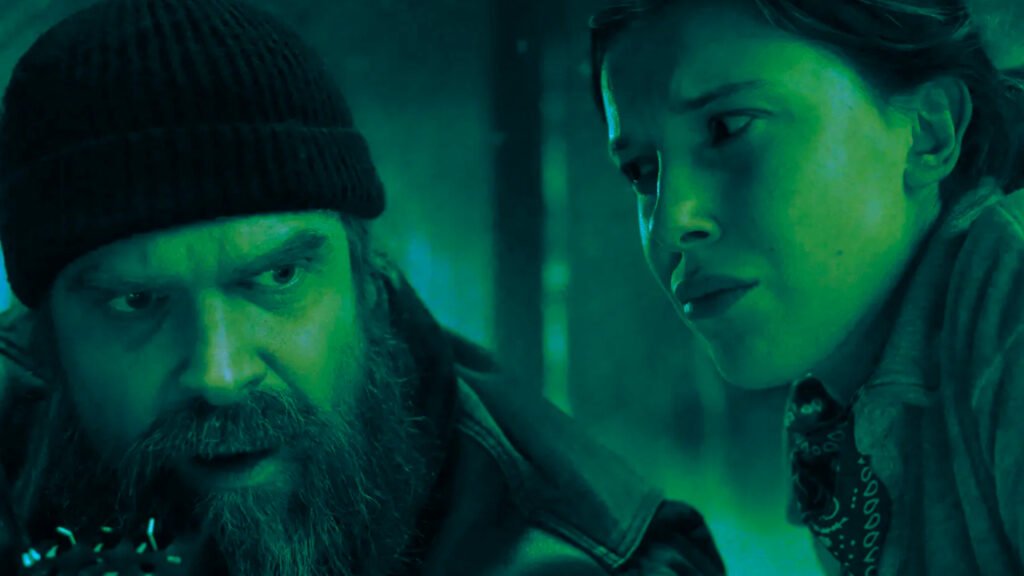
Tension peaks between Eleven and Hopper as secrets and a suicide pact threaten the Stranger Things finale.
Stranger Things
Is it possible for a father to love his daughter so much that he accidentally pushes her into a suicide pact? In the world of Stranger Things, the answer is a heartbreaking “yes.”
As we approach the series finale, the bond between Eleven and Hopper isn’t just frayed—it’s a live wire ready to snap, and the timing couldn’t be worse.
Eleven is furious. After years of being shielded, she discovered that the man she calls “Dad” had a secret suicide plan of his own.
While Hopper calls it a “failsafe,” Eleven sees it for what it is: a betrayal of the trust they’ve spent seasons building.
The Evolution of a Young Adult
Matt Duffer points out that this isn’t just about monsters anymore. It’s about the messy reality of a child becoming an adult.
Hopper is struggling to let go, especially since his history is stained by the loss of his first daughter, Sarah.
His protectiveness isn’t just a choice; it’s a reflex born from grief.
But Eleven isn’t a little girl in a cabin anymore. She’s a woman with the weight of the world on her shoulders, and she’s tired of being kept in the dark.
The Shadow of the Sister
This rift has created a dangerous vacuum, and Eight (Kali) has stepped right into it.
While the rest of the crew prepares for “Operation Beanstalk,” Eight is whispering a darker path into Eleven’s ear.
The Secret Plan Breakdown:
- The Proposition: Eight wants them both to stay behind in the Upside Down.
- The Goal: When the dimension vanishes, they vanish with it, ensuring Vecna never returns.
- The Response: That subtle nod from Eleven at the end of Episode 7 suggests she’s ready to sacrifice herself—partly to save the world, and partly because she no longer feels she can rely on Hopper.
Grief as a Weapon
What most viewers overlook is that Hopper’s “suicide plan” and Eleven’s potential “suicide pact” are two sides of the same coin.
Both characters are driven by a desperate need to protect the people they love, but they are doing it through isolation rather than partnership.
Hopper’s greatest fear is that Eleven will die. Ironically, by keeping secrets to “save” her, he has made her feel so alone that she is now choosing to die on her own terms.
The Duffer Brothers have set up a psychological mirror: Hopper’s past trauma with Sarah is now manifesting as a self-fulfilling prophecy with Eleven.
Truths About the Hopper-El Dynamic
- Distrust is a choice: We often think conflict happens to people, but here, it’s a result of Hopper refusing to treat Eleven as a peer.
- Independence is messy: Eleven’s alliance with Eight isn’t a “villain turn.” It’s an assertion of agency. She would rather make a fatal choice of her own than follow a man she no longer trusts.
- Protection can be toxic: When a parent’s fear of loss overrides the child’s need for truth, the relationship becomes a liability in a crisis.
The Final Countdown
Hopper’s words to Joyce were chilling: “I can’t lose her.” He’s ready to kill Kali the moment she makes a “false move.”
He thinks he’s fighting for Eleven, but he might actually be fighting against her wishes.
As the finale drops on New Year’s Eve, the question isn’t just whether they can stop the Abyss.
It’s whether Eleven will choose to come home, or if the “failsafes” and “secret plans” have finally burned the bridge back to Hawkins.
Summary of Key Points:
- Eleven’s distrust stems from Hopper’s hidden suicide plan in Volume 1.
- Hopper’s parenting is heavily influenced by the trauma of losing his daughter, Sarah.
- Eight has successfully manipulated Eleven into considering a self-sacrificial pact.
- The finale will center on Hopper’s “greatest fear” becoming a reality during Operation Beanstalk.

Breaking celebrity news and hot gossip. We deliver the juiciest stories and trending star updates fast.