
Discover the performance capture tech Tom Hanks used to play six characters simultaneously.
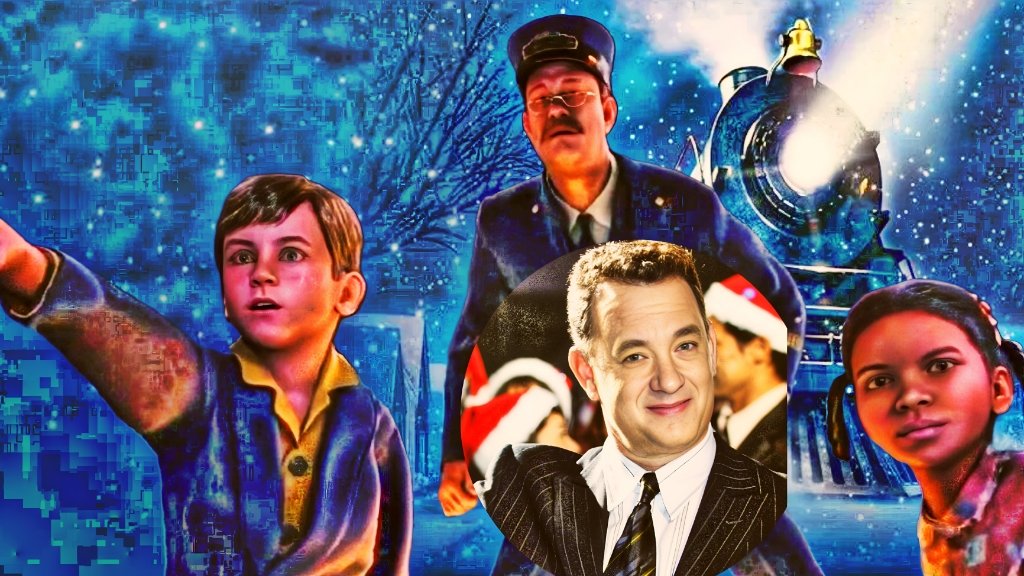
The Polar Express
Could you imagine Santa Claus being played by the same person who played a skeptical eight-year-old boy?
In 2004, Hollywood didn’t think it was possible either. When The Polar Express first landed in theaters, audiences saw a visual style they couldn’t quite name. It wasn’t a cartoon, but it definitely wasn’t “real.”
The Author’s Fear of the “Ironic” Kid’s Movie
Chris Van Allsburg, the mastermind behind the 1985 bestseller, was protective. He had seen too many children’s books turned into loud, cynical films filled with flatulence jokes and tired pop-culture references.
He didn’t think animation could capture a “believable” human, and he knew live-action would feel like a cheap imitation of his soft, oil-pastel illustrations.
Everything shifted when Tom Hanks approached him in 2001. Hanks didn’t want to make a typical movie; he wanted to bring a painting to life.
Mapping the Soul with 150 Reflectors
To bridge the gap between reality and art, director Robert Zemeckis used performance capture.
Unlike standard motion capture—which usually just tracks limbs—this system used 150 reflectors glued to the actors’ faces.
- It captured every twitch of a lip and every furrow of a brow.
- It allowed for “The In-Between,” a style that cost $160 million.
- A live-action version would have likely ballooned to $1 billion to achieve the same magic.
The Six-Character Shuffle
Tom Hanks didn’t just show up to a recording booth. He physically acted out six different roles.
He was the stern Conductor, the jolly Santa, the Hero Boy’s father, and the Narrator. Most impressively, he was the Hero Boy.
While a child provided the voice, the boy’s movements and expressions were actually Hanks’s performance digitally scaled down.
How do you keep six people straight in your head?
Hanks changed his shoes. He would swap footwear depending on who he was playing that hour to ground himself in that character’s specific walk and weight.
He even played a ghostly Hobo who, at one point, operates a Scrooge puppet—meaning Hanks was playing an actor playing a puppeteer.
The “Uncanny” Truth
People often criticize the film for being “creepy” or stuck in the “uncanny valley.”
However, the counter-intuitive truth is that photorealism was never the target. Zemeckis wanted the film to feel like a dream—slightly off, ethereal, and hazy.
If the characters looked 100% human, the magic of a train flying across a frozen lake would feel like a documentary rather than a holiday fever dream.
A Lasting Digital Footprint
This tech didn’t stop at the North Pole. It gave James Cameron the blueprint for Avatar and allowed Zemeckis to tackle Beowulf.
Decades later, Hanks and Zemeckis are still at it, using similar digital wizardry to de-age actors in their latest projects.
What started as a “prohibitively expensive” experiment became the foundation for modern blockbuster filmmaking.

Breaking celebrity news and hot gossip. We deliver the juiciest stories and trending star updates fast.