
Yvette Nicole Brown sets firm boundaries regarding Chevy Chase’s Community set scandals.
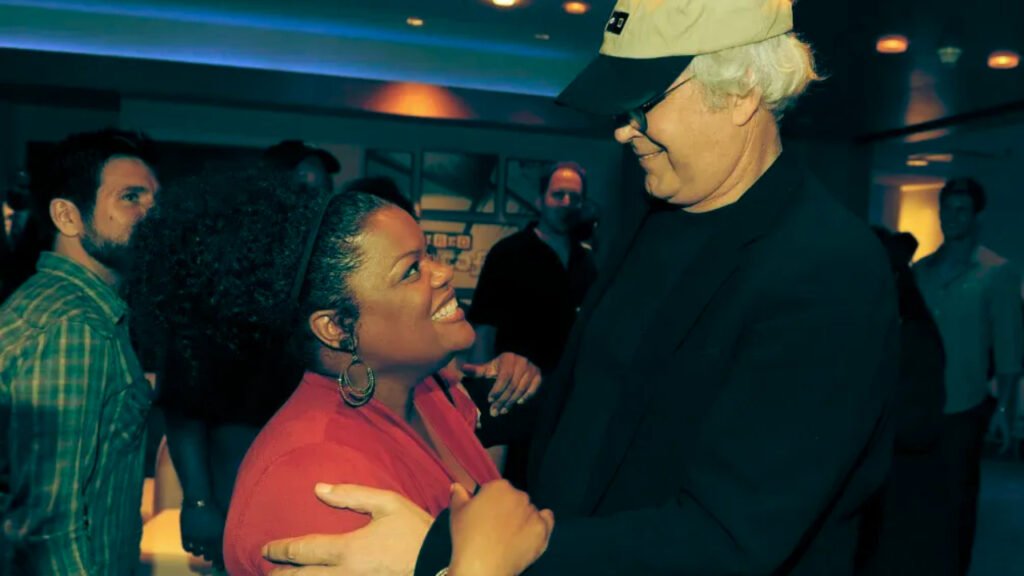
Yvette Nicole Brown Refuses to Be Your Scapegoat
Would you let a stranger write your biography based on a fight you had a decade ago? For Yvette Nicole Brown, that hypothetical became a reality this week.
As the CNN documentary I’m Chevy Chase and You’re Not prepares to hit screens, the veteran actress found her name back in the orbit of one of Hollywood’s most notorious “difficult” personalities.
But instead of joining the media circus, Brown did something far more radical: she shut the door.
The Documentary Catalyst
On December 29, Brown took to Instagram to address comments made by director Jay Chandrasekhar.
In the film, Chandrasekhar recounts the 2012 “N-word scandal” on the set of Community, describing a racial incident involving a blackface puppet bit that led to Chevy Chase’s eventual exit.
While the director claims Brown refused to return to set without an apology, Brown’s response was a sharp reminder that a witness is not an owner.
“Keep my name out of your mouth,” she wrote, invoking a classic East Cleveland boundary.
Reclaiming the Narrative from “Perceived Authorities”
The most striking part of Brown’s statement isn’t the anger; it’s the refusal to be used as “labor” for someone else’s story.
In Hollywood, there is a parasitic habit of using the trauma of marginalized groups to add “grit” or “authenticity” to documentaries about legendary (and often problematic) figures.
Brown identified several key pillars of her personal philosophy:
- The Credibility Gap: She noted that those speaking about her have never actually spoken to her.
- The Vibration Filter: She characterized the drama as “tawdry” and “low-vibrational,” asserting that engaging with it is beneath her.
- The Scapegoat Shield: She demanded that people “own fully what they alone have done” without smearing “mess” over her for the sake of “clout or reputation rehabilitation.”
The High Cost of Being a Witness
Why does Brown’s refusal to speak matter? Because in the entertainment industry, Black women are frequently cast as the “moral compass” or the “forgiving victim.”
By remaining silent for over a decade and continuing that silence now, Brown is rejecting the role of the “Black labor” that validates or condemns Chevy Chase’s legacy.
She isn’t just protecting herself; she is protecting the “clean side of the street.”
When a colleague creates a toxic environment, the fallout often clings to everyone in the room.
Brown’s stance is a masterclass in professional compartmentalization. She acknowledges that the behavior was “disgusting” but refuses to let that disgust define her own career or presence.
The Power of Not “Speaking Your Truth”
Modern culture tells us that we must “find our voice” and “speak our truth” at every opportunity. Brown offers a different perspective:
- Silence is not a lack of courage. Sometimes, speaking up gives oxygen to a fire that should have burnt out years ago. If speaking won’t change a “wayward mind,” it isn’t worth the breath.
- Don’t be a character in someone else’s redemption arc. If a former coworker is trying to rehabilitate their image, you are under no obligation to provide the testimony—good or bad—that helps them do it.
- Boundaries are a full-body experience. Brown mentioned speaking with her “whole chest” when it’s warranted. The lesson here is that knowing when to be quiet is just as powerful as knowing when to shout.
The “Big Age” Perspective
At 54, Brown is leaning into what she calls “BIG age” wisdom. This isn’t about being “nice” or “professional” in the way HR manuals describe it.
It’s about the bone-deep realization that your reputation is a private garden.
The Community set was undeniably fractured. The leaked voicemails from Dan Harmon and the “full meltdown” described by Chandrasekhar paint a picture of a workplace in chaos.
Yet, through it all, Yvette Nicole Brown remained the steady hand. Her recent statement proves that while she was in the room, she was never part of the mess.
As the documentary premieres on January 1, the public will likely dissect Chevy Chase’s career and his “difficult” nature.
But they will have to do it without Yvette Nicole Brown’s help. She has made it clear: her side of the street is clean, and she intends to keep it that way.
Key Takeaways:
- Silence can be a boundary, not just a reaction.
- Refuse to be the “moral labor” for someone else’s professional scandals.
- Own your actions and expect others to do the same without looking for scapegoats.
- Protect your “vibration” by ignoring drama that is “beneath” your current station in life.

Breaking celebrity news and hot gossip. We deliver the juiciest stories and trending star updates fast.